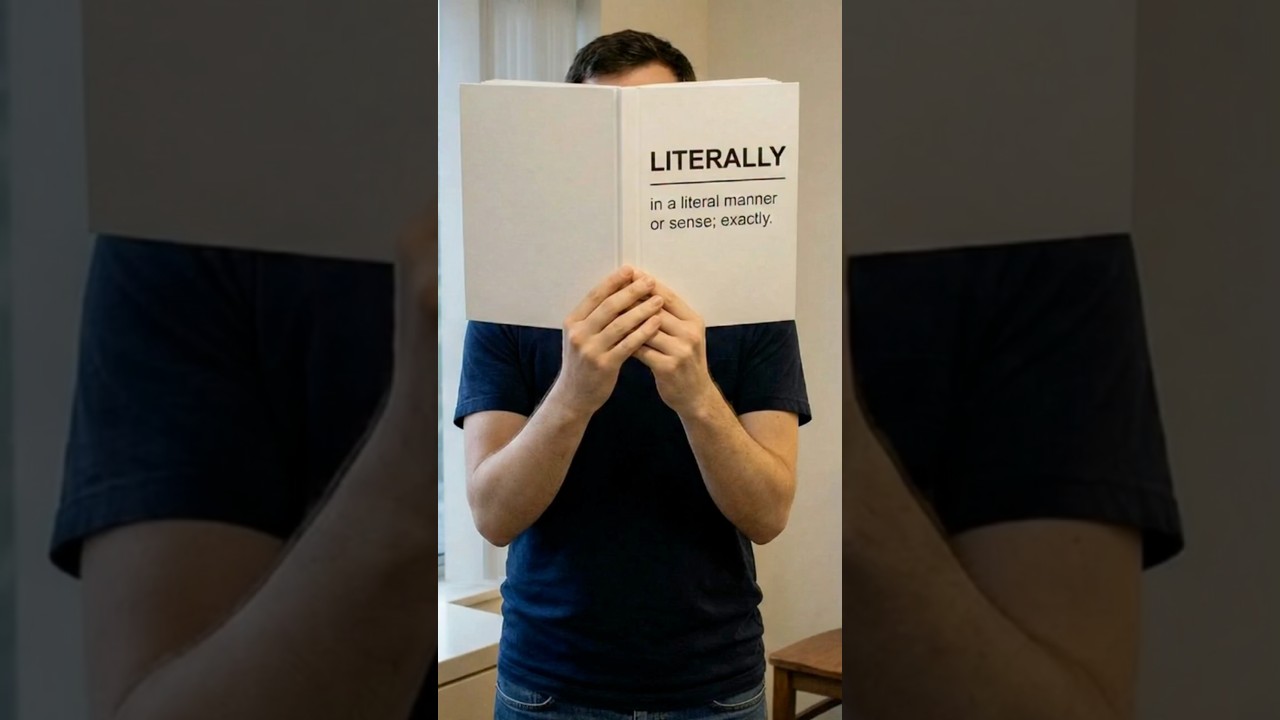
The word “literally” has two main meanings:
In a literal manner or sense; exactly as stated, without exaggeration or metaphor. This is the original meaning.
Example: “The word ‘volk’ translates literally as ‘folk'”. In this case, the translation is word-for-word.
Example: “We live literally just around the corner” means the house is exactly around the#esl corner, not a short distance away in a general sense.
(Informal use) Used for emphasis to highlight that a statement is true, even if it seems surprising or an exaggeration is being used. This sense is widely used in everyday conversation and recognized by most dictionaries, though it is often criticized by language purists because it can seem to contradict the first meaning.
Example: “I was literally bowled over by the news” means the person was extremely surprised and shocked, not that they were physically knocked over.
Example: “There were literally hundreds of people” emphasizes that the number was very large, possibly hundreds, as opposed to a smaller number.
The key difference lies in whether the expression should be taken as fact or as hyperbole. In formal or academic writing, it is generally recommended to stick to the original, non-figurative meaning.
#literally meaning #adverb #ielts
 IELTS(アイエルツ:英語試験)
コメント